
Technical guide · 21 Oct 2026 · 6 min read
Battery storage safety in 2026: what the failure data shows
Failures per GWh of battery storage fell 98 % between 2018 and 2025. What changed in cells, cooling, detection, suppression and rules, and what to check on your site.
Fall in failures per deployed GWh, 2018 to 2025
98 %
Global incidents in 2025, across 634 GWh deployed
24
Battery storage has become much safer, and the data now shows by how much. EPRI’s failure incident database, the most complete public record of battery storage fires and failures, counts failures against the capacity installed worldwide. The failure rate per deployed GWh fell 98 % between 2018 and 2025. In 2025 there were 24 incidents across a global fleet of 634 GWh, half the 2024 rate.
This guide summarises what changed across the industry to get there, what the data says still goes wrong, and what a business should check before a battery is installed on its site.
Key findings
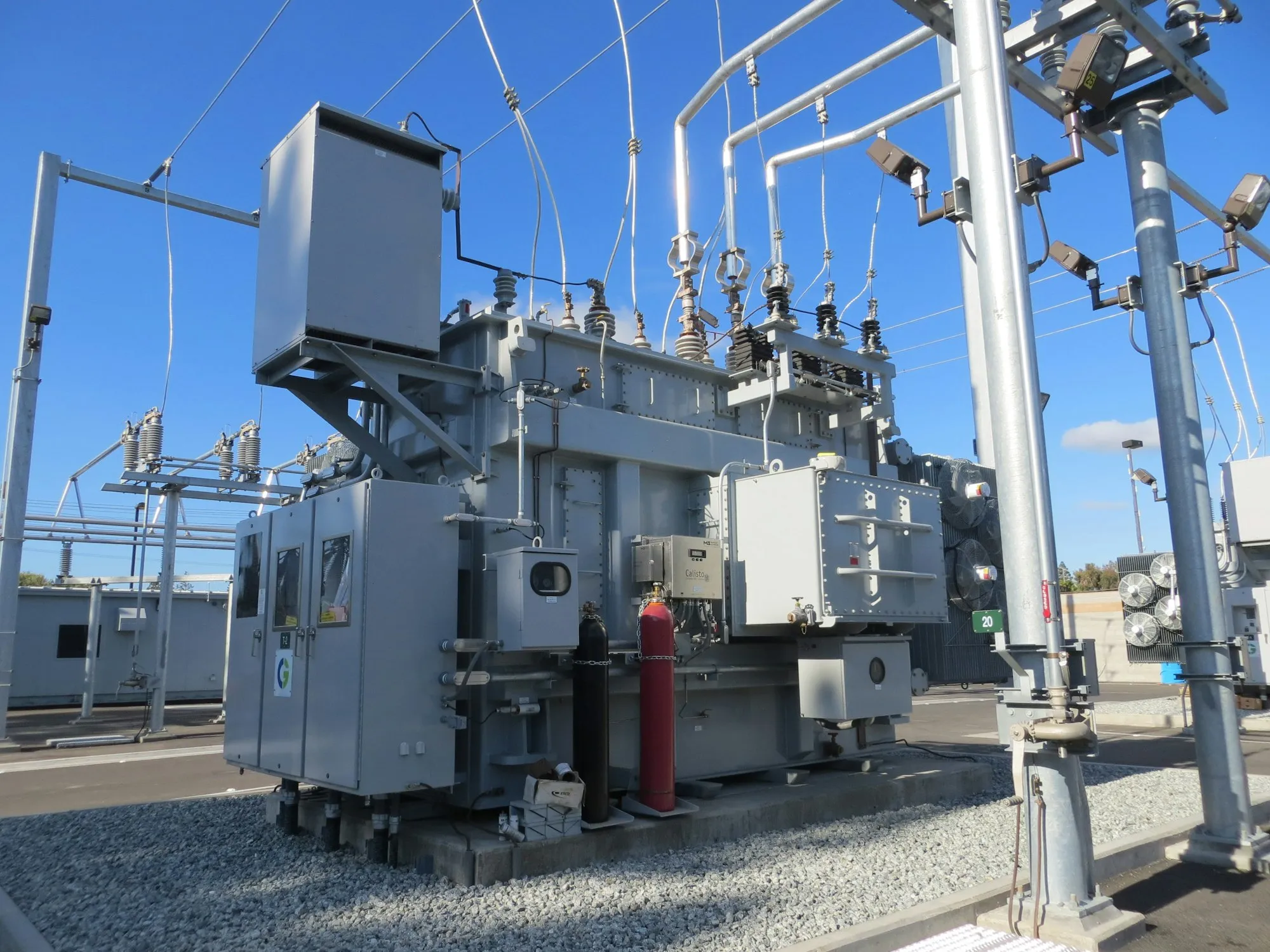
- Failures are now rare. EPRI estimates 0.04 to 0.13 % of battery containers fail each year. That is comparable to large oil-filled transformers, at about 0.1 % a year.
- Most failures are not cell failures. In EPRI’s root cause analysis, the components that failed most often were the balance of plant and the controls. The cell itself was rarely identified as the cause.
- Chemistry is not the whole story. The industry has moved from NMC to LFP cells, but EPRI recorded 34 incidents involving LFP systems between 2018 and 2025. It could not show that chemistry alone changes system-level risk.
- Design and site layout decide the outcome. Indoor installations are over-represented in incidents and suffer more damage when one occurs. Explosions occurred in 12 % of incidents and caused most of the injuries.
- Europe has a binding safety rule. The EU Battery Regulation requires stationary storage to be tested against eleven safety parameters, while harmonised standards are still being written.
What the failure data shows
| Region | Deployed by end of 2025 | Failures 2018 to 2025 | Fall in failure rate |
|---|---|---|---|
| Global | 634 GWh | 150 | 98 % |
| China | 356 GWh | 25 | 99 % |
| United States | 149 GWh | 36 | 97 % |
| Europe | 40 GWh | 20 | 85 % |
| South Korea | 13 GWh | 55 | 91 % |
Source: EPRI, 2026. The fall compares each region’s highest annual failure rate before 2021 with its 2025 rate.
Much of the improvement came between 2018 and 2020, after a series of fires in South Korea and the 2019 explosion in Surprise, Arizona. Codes, product designs and battery management all changed in response. The rate has kept falling since: EPRI’s statistical analysis shows that newer systems fail less often than older ones of the same age.
Two caveats apply. About 22 % of incidents in the database were never reported in the media, so public counts understate failures. And many incidents still have no published root cause, which limits what the industry can learn from them.
Cells: LFP, and bigger cells
Most new stationary storage now uses lithium iron phosphate (LFP) cells. Compared with NMC, LFP cells start thermal runaway at a higher temperature, reach a lower peak temperature and release a lower share of flammable gas.
Cells are also getting much larger. The standard storage cell grew from 280 Ah in 2018 to 314 Ah in 2023, and cells of 500 Ah and more passed 10 % of utility-scale deployments in the first half of 2026. Larger cells cut cost, but EPRI notes a trade-off: a single failing cell releases more heat and gas, so fire and explosion mitigation becomes harder. Sodium-ion cells are now in mass production, but they still cost more per kWh than LFP at system level.
Thermal management: liquid cooling
Tighter cell packing has pushed the industry from air cooling to liquid cooling, which keeps cell temperatures more even and slows ageing. Liquid cooling brings its own failure mode, however: some incidents have been caused by coolant leaks. Water ingress into enclosures is another recurring cause. In both cases, cell chemistry made no difference.
Detection, gas and explosion control
Modern systems monitor at several levels: cell voltages and temperatures in the battery management system, smoke and heat detectors in the enclosure, and increasingly gas sensors. A cell in thermal runaway vents flammable gas before it ignites, so gas detection can give an earlier warning than smoke or heat.
That same gas is the main explosion hazard. Since 2019, codes and designs have added explosion prevention (ventilation that keeps gas below its flammable limit) and explosion mitigation (vent panels that release pressure safely). EPRI’s analysis of the 2019 Arizona and 2024 Germany incidents found that both explosions happened after an enclosure was opened during the response. Leading practice now is to monitor and contain: keep people away from the unit and let the system’s own protection work.
Suppression
Three approaches are common, often combined:
- Clean agents, such as perfluorohexanone (FK-5-1-12), put out flames quickly without damaging electronics. Research shows they knock down the initial fire but do not stop thermal runaway in a cell. The agent is a PFAS chemical: its main producer stopped making it at the end of 2025, and an EU-wide PFAS restriction is under discussion, so supply and future rules need checking.
- Aerosol systems are compact and can sit inside battery modules.
- Water, through sprinklers, deluge or a fire-service connection, is the only one of the three that cools cells and so can stop propagation. It is more common on large containerised systems.
Rules and standards in Europe
Since August 2024, the EU Battery Regulation (Article 12) has required stationary battery storage to be safe in normal operation and intended use. The technical documentation must show successful tests against eleven safety parameters in Annex V: thermal shock and cycling, external short circuit, overcharge, over-discharge, over-temperature, thermal propagation, mechanical damage, internal short circuit, thermal abuse, fire, and emission of gases.
Harmonised European standards that cover all of these tests do not exist yet. The European Commission’s Joint Research Centre found that no existing standard covers every test the regulation lists. In practice, suppliers combine standards such as IEC 62619 (safety of industrial lithium batteries) and IEC 62933-5-2 (safety of grid-connected electrochemical storage) with UL 9540A. UL 9540A is a test method rather than a pass-or-fail certificate: it measures whether, and how fast, a fire spreads from one cell to the next, and fire authorities use its results to set distances and protection.
What to check before a battery goes on your site
- Certificates, not lists. Ask which standards are certified, by which test body, and how the supplier meets the eleven Annex V parameters.
- Propagation data. Ask for UL 9540A results at module and unit level, and what they mean for spacing on your site.
- Gas and explosion control. Ask how the system detects flammable gas and how it prevents or vents an explosion.
- Suppression. Ask which agent is used, whether it can discharge more than once, and whether there is a way to cool cells with water.
- Location. Outdoor units with separation between them limit the damage from any single failure. If a battery has to go indoors, ask about fire walls and ventilation.
- Water and coolant. Ask for the enclosure’s IP rating and how coolant leaks are detected.
- Monitoring and response. Ask who watches the system around the clock, and agree an emergency response plan with your local fire service before commissioning.
How Cubex approaches safety
We build our systems around the same lessons: LFP cells, detection at cell and enclosure level, suppression matched to each format, and remote monitoring. Our outdoor systems add liquid cooling, sealed battery packs and explosion protection. If you are planning storage on your site, our engineers will answer the questions above for your project.
Sources
- EPRI, Risk Factors and Failure Statistics of Lithium Ion BESS, white paper 3002034920 (October 2026)
- EPRI, BESS Failure Incident Database
- Regulation (EU) 2023/1542 on batteries, Article 12 and Annex V
- European Commission JRC, Overview of battery safety tests in standards for stationary battery energy storage systems (JRC135870, 2024)
- pv magazine USA, Intertek CEA says 587Ah cells could drive down BESS costs through 2027 (14 Jul 2026)
- pv magazine USA, Energy storage moves toward next-gen lithium cells as price volatility drives interest in alternatives (13 Aug 2026)
- Fireaway, statement on 3M Novec 1230 and FK-5-1-12 (3M exit from PFAS manufacturing by end of 2025)
- Yu et al., Perfluorohexanone for clean fire suppression, Safety Science and Technology (2025)